Understanding Item Tiers in PoE2
Time: 2025-12-24 by mmojugg Game: Path of Exile 2 Guide Tags: Path of Exile 2 General
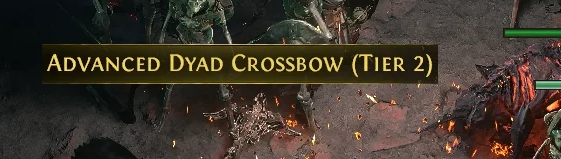
In Path of Exile 2 (PoE2), the term "tier" when applied to items is crucial to understanding the potential value and utility of gear. It dictates the strength of your character's power and determines whether an item is a vendor-fodder or a mirror-tier masterpiece. This guide breaks down how tiers affect your gameplay, crafting, and trading decisions. (Last Updated: 24 Dec 2025)
What Are Item Modifiers?
Before diving into how tiers work, it is essential to understand Item Modifiers (Mods).
Mods and Their Pools
Each item in PoE2 has a pool of possible mods (modifiers) it can have. These are divided into:
Prefixes: Mods that typically add or increase offensive stats (e.g., increased physical damage).
Suffixes: Mods that usually offer utility or defensive layers, such as resistances (e.g., fire resistance).
Mod Tiers The Hidden Power
While the "Base Tier" determines an item's innate armor or damage, Mod Tiers determine the magnitude of the stats rolled on it.
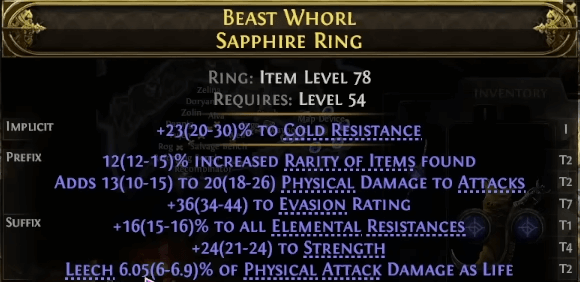
When using advanced item display (holding Alt), you will see a Tier assigned to every single modifier.
Numerical Hierarchy: Mod Tiers follow an inverse relationship with power. Tier 1 (T1) is the highest possible roll, providing the maximum numerical values, while higher numbers (T10, T11) represent the weakest versions of that mod.
The iLvl Gatekeeper: Mod Tiers are strictly locked behind the Item Level (iLvl). Even a Tier 4 endgame base cannot roll a T1 Life mod if its iLvl is too low (e.g., iLvl 50). Top-tier mods (T1-T2) typically require iLvl 82-86.
Roll Ranges: Within each Mod Tier, there is a sub-range. A T1 Life mod might range from 120-130. Using a Divine Orb can reroll the values within that tier, but it will never upgrade a T2 mod to a T1 mod.
Explicit Mods Structure
The visible stats on an item, known as explicit mods, vary by rarity:
Item Rarity | Max Explicit Mods | Mod Structure |
|---|---|---|
Magic Items | 2 Mods | 1 Prefix + 1 Suffix (Max) |
Rare Items | 4-6 Mods | Typically 3 Prefixes + 3 Suffixes |
Corrupted Items | Variable | Can gain an extra explicit mod through corruption |
Note: Some items like jewels or flasks have different mod structures, but the principle of tiers applies similarly.
What Are Item Tiers? How do they work?
Now that we understand what modifiers are, we can begin to delve deeper into the Item Tier system itself and how it scales your character's power.
Tier Levels and Strength
Each mod has several tiers, typically ranging from T5 (lowest) to T1 (best). The tier determines the numerical strength of the mod:
T1 (Top Tier): Offers the highest possible stats within the mod's range.
T5 (Basic Tier): Offers the lowest stats, making it less desirable for endgame.
Range Within Tiers
Each tier has a specific range of values. For example, "Increased Physical Damage" might have a T1 range of 40-45%, while T5 might be 10-15%.
Important Update: Since Patch 0.2.0, Path of Exile 2 uses the same display logic as PoE1. When using advanced item display, "Tier 1" always represents the highest/best possible roll, allowing players to quickly assess the true power of an item or crafting base.
Tier Impact on Mod Pool
Higher tiers effectively remove lower-tier mods from the potential pool for that item. For instance, if an item base supports up to Tier 1, it improves the odds of hitting high-value mods during the crafting process compared to lower-level bases.
Why Tiered Items Are Valuable
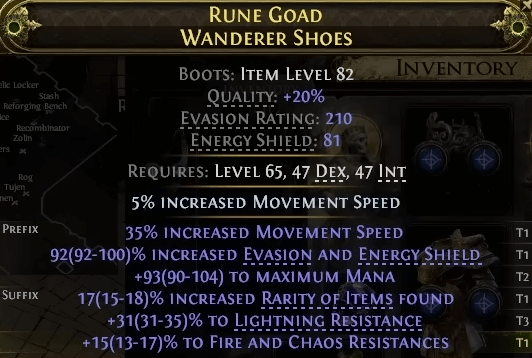
Quality Over Quantity: Tiered items, especially those with high-tier mods, offer better stats, making them more impactful to your build.
The "Sweet Spot" (T2/T3): Mods at Tier 2 or 3 are often very good, providing significant boosts without being as rare as T1. They are accessible yet highly valuable for mid-to-late game.
Crafting and Trading: Knowing the tier of an item helps you decide whether to invest currency (like Essences or Exalted Orbs) into rerolling. In the player market, higher-tier items generally command significantly higher prices.
Example: +Maximum Life Mod Tier Impact
To better understand the power gap between tiers, let's look at a common modifier: +Maximum Life on a Body Armour.
Mod Tier | Roll Range (Example) | Required Item Level (iLvl) | Power Level |
|---|---|---|---|
Tier 1 (T1) | 120–130 | 84+ | Elite / God-tier |
Tier 2 (T2) | 100–119 | 78+ | High-End |
Tier 3 (T3) | 80–99 | 64+ | Mid-Game Core |
Tier 4 (T4) | 60–79 | 42+ | Entry Mapping |
Tier 5 (T5) | 40–59 | 20+ | Leveling / Basic |
As shown above, a Tier 1 roll can provide more than double the benefit of a Tier 5 roll. This is why high-iLvl bases are so valuable—they are the only items capable of hosting these top-tier "numerical powerhouses."
Practical Tips for Exiles
Pick Up and Identify Strategically: Don't overlook common-looking Rares. Always prioritize identifying items that drop from high-level areas (iLvl 82+) on high-base tiers, as these are the only ones capable of holding hidden T1 Modifiers.
Leverage External Data: Use sites like POE2DB to check the "weight" of T1 mods. Some T1 tiers are significantly rarer than others, meaning an item with multiple T1 rolls is exponentially more valuable on the market.
Master Base Knowledge: Different item bases favor different mods. For example, Intelligence-based armor (Energy Shield) is weighted toward caster mods, while Strength-based armor (Armor) favors melee stats. Choosing the right base tier is the first step in a successful crafting project.
The "Alt" Habit: Make it a habit to hold the Alt key on every promising drop. If an item has three T1/T2 mods that synergize, it's a high-value asset, even if the other rolls are mediocre.
FAQs about Item Tiers in Path of Exile 2
Q1: How can I see the Tiers of the mods on my items?
You can view item tiers by enabling "Advanced Mod Descriptions" in the UI settings. Once enabled, hold the Alt key while hovering over an item to see the specific Tier (T1, T2, etc.) and the roll range for each modifier.
Q2: Does Item Level (iLvl) affect which Tiers I can roll?
Yes. Item Level acts as a "gatekeeper." For example, you might need an iLvl of 82+ to roll Tier 1 Life on a chest piece. Even if the base item is high-tier, a low iLvl will prevent the best modifiers from appearing.
Q3: What makes a "Base Item" valuable for crafting?
A valuable base usually has a high Item Tier (innate stats) and a high Item Level (to allow T1 mods). In PoE2, players hunt for specific Tier 1 bases to start their endgame crafting projects.
Q4: Are Unique items always better than high-tier Rare items?
Not necessarily. While Uniques offer special mechanics, a well-rolled Rare item with multiple T1/T2 mods often provides much higher raw stats (like Life and Resistances) that are essential for survival.
Q5: Is it worth using currency on Tier 3 or Tier 4 items?
Absolutely. T3 and T4 items are excellent for clearing the campaign and early Atlas maps. They provide the necessary power spike to reach the content where T1 items actually drop.
Thanks for Reading
Item tiers in PoE2 directly influence how good an item can be. By understanding this system, players can better navigate the game's complex itemization, making informed decisions on what to keep, what to craft, and what to trade.
Back to Hub: PoE 2 Ultimate Guide Hub
 Buy PoE2 Currency
 PoE2 Boosting