Mastering Light vs Heavy Armor in Dune: Awakening
Last updated on August 5, 2025 by MMOJUGG Team | Game: Dune Awakening Guide | Tags: Dune Awakening Gear
Hey, Sleepers! Struggling to decide between light and heavy armor in Dune: Awakening? Choosing the right gear can make or break your survival on Arrakis, whether you're dodging sandworms in PvE or facing off against rival players in PvP. This guide breaks down the differences between light and heavy armor, their impact on your playstyle, and how to pick the best set for you. If these tips spark your interest, consider bookmarking our site and checking out our Dune: Awakening Solari and Items store, loaded with premium materials and vehicles to enhance your desert adventures.
Why Armor Choice Matters
In Dune: Awakening, armor isn't just about soaking damage—it shapes how you move, fight, and survive. Light armor and heavy armor fall under the Combat Garment category, prioritizing Armor Value for defense against Arrakis' threats, like Scavenger Camps or Imperial Testing Stations. Each type has unique strengths and trade-offs, impacting stamina, mobility, and damage mitigation. Your choice depends on your playstyle, whether you're a melee-focused Swordmaster, a ranged sniper, or a hybrid explorer. Let's dive into the details to help you decide.
Light Armor: Speed and Versatility
Light armor is the go-to for players who prioritize mobility and stamina efficiency. It's perfect for melee builds, snipers, or anyone who needs to stay agile in PvE or PvP. Here's why light armor shines:
Key Benefits:
- Reduced Dash Stamina Cost: Light armor lowers the stamina needed for dashing, allowing up to 5+ dodges per stamina bar compared to 2–3 with heavy armor. This is critical for dodging slow blades or repositioning in PvP.
- Blade Mitigation: Offers up to 32% resistance to blade damage, making it ideal for melee combat against Swordsmen or NPCs wielding knives.
- Heat Protection: Provides moderate heat resistance, reducing Heatstroke buildup during exploration in Hagga Basin or Row A.
- Lightweight: Allows you to carry more gear, which is great for solo players scavenging resources.
Best Use Cases:
- Melee PvP: Pair with a Holtzman Shield to mitigate ranged damage while dashing to avoid slow blades.
- Stealth and Sniper Builds: Use with scoped rifles or teleportation abilities for hit-and-run tactics.
- PvE Exploration: Combine with a Stillsuit for hydration management in early-game Hagga Basin content.
- Top Pick: The Syndicate armor set (e.g., Syndicate Chest) is a standout for its Duraluminum repair cost, which is cheaper than Plastanium. It offers solid blade resistance and decent fire resistance, making it versatile for PvE dungeons or PvP encounters with flamethrowers.
Drawbacks:
- Lower Armor Value (e.g., 786 at Tier 5) means less overall damage mitigation compared to heavy armor.
- Limited ranged damage resistance, making you vulnerable to light darts, heavy darts, and concussive damage (e.g., rockets from Ornithopters).
Heavy Armor: Tanky but Costly
Heavy armor is designed for players who want to stand their ground and absorb hits, especially in ranged combat scenarios. It's the choice for tanky builds or PvP players facing gun-heavy metas. Here's what makes heavy armor stand out:
Key Benefits:
- High Armor Value: At Tier 5, heavy armor offers 1417 Armor Value, providing 73% mitigation against blade, light darts, and heavy darts, significantly outpacing light armor's 61%.
- Ranged Damage Mitigation: Grants 20% additional resistance to light darts, heavy darts, and concussive damage, making it ideal for PvP against snipers or Ornithopter rockets.
- Endgame Durability: Excels in PvE scenarios like Imperial Testing Stations or Deep Desert research stations, where NPCs deal heavy ranged damage.
Best Use Cases:
- Ranged PvP: Perfect for minigun or auto AR users, as shields are disabled while firing, and heavy armor compensates with ranged mitigation.
- PvE Tanking: Ideal for group play in Scavenger Camps or hive attacks, where you can soak projectile damage while allies provide healing or support.
- Deep Desert Combat: The Acheronian set is top-tier for its high Armor Value and dart mitigation, found in Shiton's Grotto.
Drawbacks:
- Increased Blade Damage: Takes up to 40% more damage from blades, making it risky against melee NPCs or Swordsmen in PvP.
- High Stamina Cost: Increases dash stamina cost by 15%, limiting you to 2–3 dodges per stamina bar, which can leave you vulnerable if stamina runs out.
- No Heat Protection: Requires carrying extra Literjons for hydration in the desert, unlike light armor or Stillsuits.
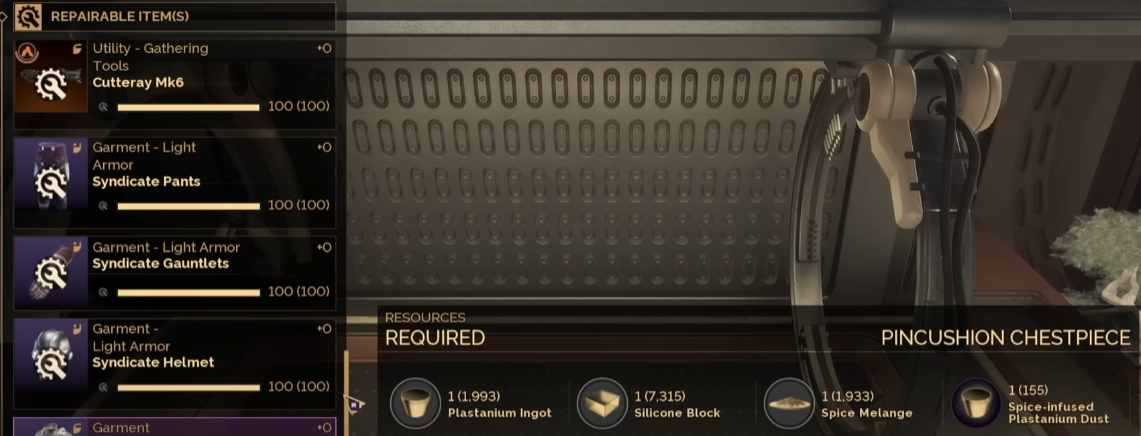
- High Repair Costs: Sets like Pincushion require Spice Melange and Plastanium Ingots, which are expensive and scarce, especially for solo players.
Comparing Key Scenarios
To choose between light and heavy armor, consider your playstyle and the threats you face:
- PvE Farming (e.g., Row A Testing Stations): Light armor is better for solo players due to its stamina efficiency and heat protection. Pair with a Scout Ornithopter for quick looting. Heavy armor suits group play where you tank ranged NPCs while allies handle melee threats.
- PvP Combat: Heavy armor excels in ranged metas (e.g., sniper rifles, miniguns), but light armor is superior for melee builds or gap-closing with Drillshots to force opponents to burn stamina.
- Deep Desert Exploration: Light armor or a Stillsuit is more practical for solo exploration due to heat resistance and hydration management. Heavy armor is viable for guild-based Deep Desert runs with support.
The Pincushion Set: Best but Pricey
The Pincushion set is often hailed as the best armor due to its high Armor Value (934 at Tier 6) and balanced mitigation for light and heavy darts (65% total mitigation). However, its Spice Melange repair cost (e.g., 15 Melange for partial repairs) makes it impractical for solo players or those without steady guild resources. The Syndicate set, repairable with Duraluminum, offers 80–90% of the Pincushion's benefits at a fraction of the cost, making it a practical choice for most players.
Shields and Armor Myths
A common myth is that armor values boost Holtzman Shield durability—this is false. Shields absorb damage independently, but Disruptors, Lasguns, and SMGs deal extra damage to them, especially with center-of-mass hits. Once your shield is down, armor determines your survivability. Light armor helps you dodge to avoid shield breaks, while heavy armor lets you tank ranged hits post-shield. Always carry a Drillshot FK7 or Disruptor to counter enemy shields in PvP.
FAQs About Light vs Heavy Armor in Dune: Awakening
Is light armor better for melee builds?
Yes, light armor reduces dash stamina cost and offers 32% blade mitigation, making it ideal for Swordsmen or melee PvP builds relying on dodging and shields.
When should I use heavy armor?
Heavy armor is best for ranged PvP or PvE tanking in Deep Desert or group events, where ranged damage (e.g., darts, rockets) is the primary threat.
Does heavy armor slow movement speed?
Heavy armor doesn't directly reduce movement speed but increases dash stamina cost by 15%, limiting your ability to dodge or reposition quickly.
Can I mix light and heavy armor?
Yes, you can mix pieces for hybrid benefits, like pairing a Syndicate Chest (light) with Heavy Gloves for dart mitigation. However, full sets maximize specific mitigation bonuses.
Is the Pincushion set worth the cost?
The Pincushion set offers top-tier Armor Value and dart mitigation but requires Spice Melange for repairs, making it less practical for solo players compared to Syndicate armor.
Thanks for Reading
Choosing between light and heavy armor in Dune: Awakening comes down to your playstyle and resources. Light armor keeps you agile and stamina-efficient for melee or PvE exploration, while heavy armor makes you a ranged tank for PvP or endgame PvE. For most players, the Syndicate set strikes the best balance of cost, durability, and versatility. Stay sharp, adapt to your enemies, and keep exploring Arrakis your way. For more guides and premium gear, keep an eye on MMOJUGG! 👉 [Explore our Dune: Awakening Ultimate Guides Hub Now]
Table of Content
 Buy Dune Awakening Solari
 Buy Dune Awakening Items
 Dune Awakening Boosting