Dune Awakening Landsraad Guide: Power & Politics
Last updated on June 17, 2025 by MMOJUGG Team | Game: Dune Awakening Guide | Tags: Dune Awakening System

If you're diving into the sandy depths of Dune Awakening, the Landsraad is where the real action happens in the mid-to-endgame. This political council shapes server-wide dynamics, letting players influence the galaxy's power balance through cunning, strategy, and teamwork. Curious about mastering this aristocratic showdown? Keep reading to uncover how the Landsraad works, how to dominate its cycles, and why it's the beating heart of Dune Awakening's endgame. For more gaming insights and to gear up for the deserts of Arrakis, consider bookmarking our site and exploring our Dune Awakening Solari and items store, packed with materials and vehicles to elevate your journey.
What Is the Landsraad?
Imagine a galactic council where noble houses scheme, betray, and vie for control—welcome to the Landsraad in Dune Awakening. This server-wide assembly is where Great Houses, like House Atreides and House Harkonnen, send representatives to flex their influence. These families, controlling entire planets or star systems, form a political counterweight to the Emperor's power, ensuring no single entity dominates the galaxy.
The Landsraad's purpose? Balance. It can withhold support from the Emperor, sway the CHOAM trading conglomerate, or adjust spice quotas. In Dune Awakening, it's a dynamic political sandbox where every action—whether PvE missions, PvP skirmishes, or resource deliveries—earns votes for your chosen house, shaping server-wide decrees that affect all players.
How the Landsraad Works in Dune Awakening
When you join a guild in Dune Awakening, you align with a Great House (initially Atreides or Harkonnen, with more to come). The Landsraad operates on a weekly cycle, tracked by a visible timer called the Landsraad Term. Here's how it unfolds:
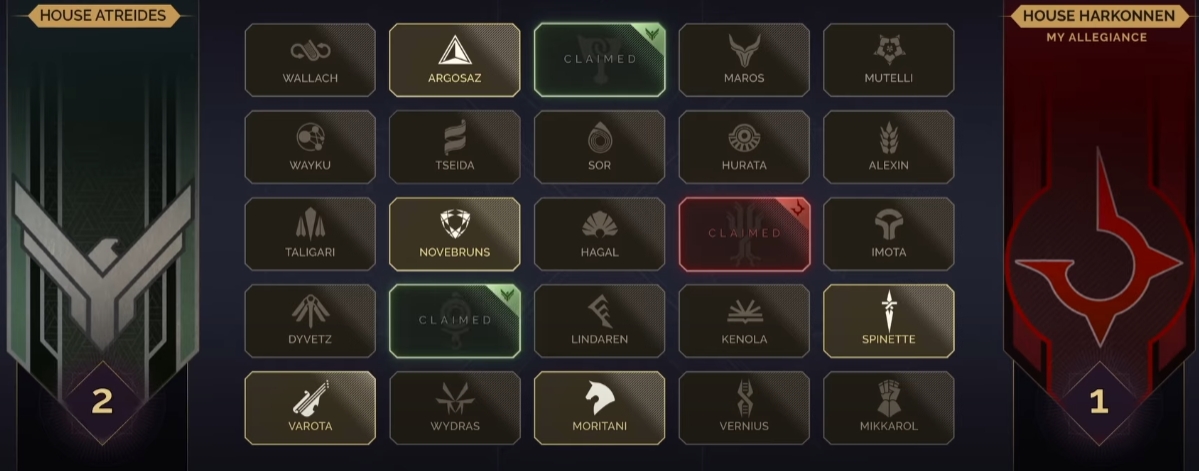
Missions and Objectives: Each week, houses assign rotating tasks, such as resource deliveries (think spices or high-value materials), territory control (holding desert outposts or resource nodes), or reconnaissance runs (mapping deep desert sectors). Completing these earns votes for your house.
Voting and Decrees: At the end of the week, the house with the most votes wins the Landsraad. Guild leaders from the winning house cast ballots on a decree that sets server-wide conditions for the next term. Decrees might include faction perks (e.g., reduced crafting costs), PvP rule tweaks (like open-world looting), or resource-gathering buffs.
Dynamic Gameplay: To keep things fresh, tasks rotate on a weekly basis. One week might focus on spice deliveries, the next on territory control or sabotage missions against rival houses. This forces guilds to adapt strategies, forge alliances, or betray rivals in real-time.
Every player, from solo PvE grinders to PvP squads, contributes to their house's vote count. Even crafting-focused lone wanderers can impact the outcome through resource runs or PvE missions like eliminating NPC groups.
Why the Landsraad Matters
The Landsraad isn't just a fancy council—it's the engine driving Dune Awakening's endgame. Here's why it's a game-changer:
Server-Wide Impact: Decrees affect everyone, friend or foe. A PvP-focused decree might turn the deep desert into a lawless battleground, while a crafting buff could ease resource grinds.
Rewards: Top-tier resources, rare crafting materials, and high-end weapons are often tied to Landsraad objectives, making participation crucial for competitive guilds.
Dynamic Politics: The rotating tasks and shifting alliances create a living sandbox where every spice shipment or outpost defense shapes the server's power balance.
Whether you're a PvE enthusiast or a PvP warrior, your actions feed into this political machine, making every decision feel weighty.
Tips to Dominate the Landsraad
Ready to lead your house to victory? Here are practical strategies to maximize your influence:
Build a Balanced Team: Assemble a squad with resource specialists, skilled scouts for map runs, and PvP fighters to cover all objective types.
Communicate Effectively: Use Discord or in-game chat to track high-value resource spawns, spice blows, or enemy guild movements. Some players are even developing Discord bots to announce events like spice blows—stay ahead by leveraging these tools.
Adapt to Weekly Objectives: Check the Landsraad window at reset to prioritize tasks. For spice rush weeks, focus on harvesting; for territory control, coordinate outpost pushes.
Stay Flexible in PvP: Even PvE players should be ready to defend spice convoys or contest zones when PvP decrees are active. Preparation prevents ambushes.
Optimize Guild Coordination: Work with your guild to assign roles—who farms resources, who scouts, who fights—to maximize vote efficiency.
By weaving these strategies into Dune Awakening's gather-craft-conquer loop, you'll turn the Landsraad into your playground.
FAQs About the Landsraad in Dune Awakening
Do I have to participate in PvP for the Landsraad?
No, PvE players can contribute through missions like resource deliveries or eliminating NPC groups, though PvP can boost your house's votes in contested zones.
How often do Landsraad tasks change?
Tasks rotate weekly, keeping gameplay fresh with objectives like spice deliveries, territory control, or sabotage missions.
What happens if my house wins the Landsraad?
Guild leaders from the winning house vote on a decree that sets server-wide conditions, like crafting buffs or PvP looting rules, for the next term.
Can solo players impact the Landsraad?
Yes, solo players contribute votes through PvE tasks like resource deliveries or reconnaissance, supporting their house's tally.
What rewards come from Landsraad objectives?
Completing tasks grants access to top-tier resources, rare crafting materials, and high-end weapons, crucial for staying competitive.
Thanks for Reading
The Landsraad transforms Dune Awakening into a thrilling political battlefield where every action counts. Whether you're hauling spice, defending outposts, or plotting with allies, your choices shape Arrakis' future. Stay tuned to MMOJUGG for more tips, guides, and resources to conquer the sands! 👉 [Explore our Dune: Awakening Ultimate Guides Hub Now]
Table of Content
 Buy Dune Awakening Solari
 Buy Dune Awakening Items
 Dune Awakening Boosting