Dune Awakening Deep Desert Weekly: Dec 9 - Dec 15
Last updated on December 9, 2025 by MMOJUGG Team | Game: Dune Awakening Guide | Tags: Dune Awakening Deep Desert
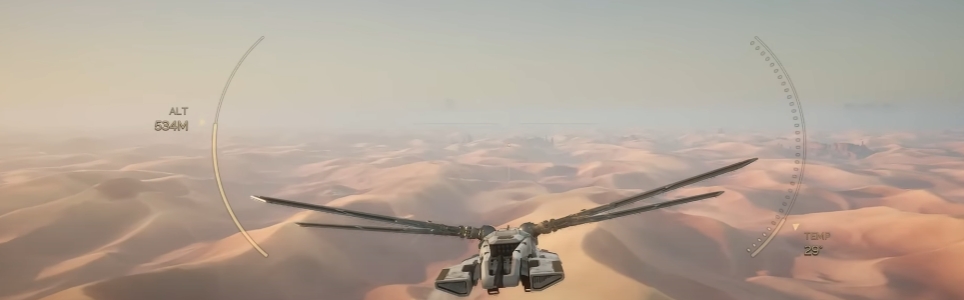
As the relentless Coriolis storms reshape Arrakis each week, the Deep Desert calls to those ready to claim its hidden treasures. Whether you're a cautious harvester eyeing steady gains or a bold raider chasing high-stakes rewards, this cycle's layout offers balanced opportunities across its vast grid.
Before you launch your ornithopter into the dunes, consider bookmarking this spot for quick reference—it's designed to evolve with the sands. And if you're gearing up, swing by our Dune Awakening Shop to stock up on essentials like Solari, Spice Melange, Crafting Resources, vehicles, unique gear, schematics, and more at MMOJUGG.com. Your next expedition deserves the edge.
Expansive Island Layouts
This week's Deep Desert map bursts with landmasses, particularly clustered in rows D and E, providing ample space for forward operating bases without the usual scramble for scraps. These aren't just scattered specks; we're talking substantial islands ripe for expansion, from sturdy platforms in D1 and D3 to sprawling networks spanning D5 through D6. Row E shines too, with E4 offering a dominant central hub and E6-E7 featuring interconnected dual-island clusters that allow seamless jumps between outposts.
What makes this layout stand out is its accessibility—no more endless scans for viable plots. Players can anchor down quickly, minimizing exposure during setup and focusing energy on resource runs instead. For visual clarity, here's a breakdown of key island clusters:
Row/Column | Island Type | Strategic Notes |
|---|---|---|
D1, D3 | Medium Anchor Points | Ideal for quick-deploy refineries; low worm risk due to elevation. |
D5-D6 | Large Expansive Chains | Supports multi-structure bases; central access to east-west travel routes. |
E4 | Dominant Hub | Overlooks multiple spice approaches; perfect for ornithopter staging. |
E6-E7 | Dual-Cluster Networks | Enables rapid repositioning; watch for flanking in adjacent PVP tiles. |
This abundance encourages experimentation—solo builders might favor isolated D-row spots, while groups could chain E7's twins for defensive perimeters. Remember, while land is plentiful, storms still demand reinforced designs to endure the weekly reset.
Medium Spice Field Concentrations
For those prioritizing efficient harvesting without diving headlong into chaos, medium spice fields dominate the western flank this cycle, erupting in a generous spread from E2 and D2 outward. Expect up to nine active sites rippling across columns 1 through 9, creating a vibrant plume zone that's easier on fuel reserves than ever. Positioning your sandcrawler near these—say, in the E5 to D2 corridor—slashes travel time, letting you cycle blows repeatedly with your carrier ornithopter.
Yet, density brings its own trials: clustered fields heighten sandworm activity, with roamers surfacing more frequently amid the dunes. Scout ahead, and keep lift-off protocols sharp to evade those massive jaws. To help plot your routes, consider this overview of field distribution:
Column Range | Field Density | Harvest Tips |
|---|---|---|
1-3 | Moderate (3-4 sites) | Pair with D2 bases; use compactors for quick 500-800 Spice Sand pulls. |
4-6 | High (4-5 sites) | Central sweet spot—E5 access; monitor for overlapping blows to chain yields. |
7-9 | Moderate (2-3 sites) | Edge toward PVP; fuel-efficient for ornithopter hops, but worm aggro spikes. |
This western bias rewards proactive positioning, turning potential fuel sinks into melange windfalls. If you're refining on-site, a medium Spice Refinery here could net thousands weekly, fueling upgrades back in Hagga Basin.
Large Spice Field Distribution
Shifting to the adrenaline-fueled PVP expanse, six large spice fields anchor the northern grid, evenly dotted to keep raiders guessing without funneling everyone into chokepoints. Unlike prior cycles with lopsided pops—think last week's G1 overload—these are balanced across the zone, from G-row edges to H-column interiors. No outliers expected beyond this count; historical patterns cap at six, ensuring contested but fair plays.
The even spread means no single tile guarantees dominance—one field might cycle solo in G5, while multiples flare in F3 clusters. Base wisely: proximity matters, but overcommitting to one risks dry spells when rotations favor distant rivals. For tactical planning, track these via in-game scanners, but here's a generalized spawn heatmap:
PVP Row | Primary Fields | Engagement Outlook |
|---|---|---|
F | F3, F6 (2 sites) | Frequent doubles; ideal for guild defenses, but high intercept risk. |
G | G1, G5 (2 sites) | Balanced solo/group; G5's isolation suits ambushes. |
H-I | H2, I4 (2 sites) | Northern push—scarce but massive yields; storm-vulnerable. |
In this setup, adaptability trumps prediction. Equip disruptor-sidearms for worm distractions, and always have an escape vector—large fields draw crowds, turning harvests into skirmishes.
Key Points of Interest
The true game-changers lie in this cycle's POIs, blending solo-friendly delves with group-mandatory marathons. Two expansive 2,000-unit caves loom in H5 and H2, prime for pincushion farming—their depths yield those rare gel-infused drops at steady clips, far outpacing basin hauls. Solo runners will appreciate G7's compact wreck layout, navigable without backup, though its exact variant (scout via linked wreck breakdowns) dictates NPC waves.
Lower down, B7 and the C3-B3 border host paired wrecks, tantalizingly near A-row labs but fraught with flyover traffic—cloak your thopter and loot fast to dodge patrols. For crews, the duo of Imperial Testing Stations—one PVP, one PVE—demands coordination; their hour-long clears unlock lasgun blueprints, but solo grinds feel eternal for that single chest. Bonus: Aerithite veins thread G5 and E9 caves, perfect for cobalt paste processors eyeing sustained ops.
To streamline your POI rotations, use this priority matrix:
POI Type | Location(s) | Solo Viability | Group Benefit | Key Yield |
|---|---|---|---|---|
Large Caves | H2, H5 | High (quick clears) | Moderate | Pincushion components (7% set chance). |
Compact Wreck | G7 | High | Low | Variant-specific tools; low NPC resistance. |
Paired Wrecks | B7, C3-B3 | Medium (traffic risk) | High | Repeating schematics; watch for PVP tags. |
Testing Stations | PVP (e.g., H-row), PVE (D-row) | Low | High | Lasgun blueprints; 180 Intel per run. |
Aerithite Caves | G5, E9 | High | Moderate | Crystal nodes for paste; process on-site. |
Hit these early—post-storm resets refresh loot, but delays mean contested access.
Major Resource Deposits
Splitting the map neatly, this week's heavy nodes cleave east-west: Titanium veins cluster westward for structural crafts, while Stravidium masses gleam eastward, essential for advanced fibers. No overlaps this time—decide your needs upfront, then ferry buggies via ornithopter for 5x harvest speeds. Central bases shine here, halving cross-map hauls compared to fringe setups.
Pro tip: Pair Titanium runs with western spice for combo efficiency, reserving Stravidium for eastern POI loops. Yield estimates hold steady at 2-3k units per node cycle, but depletion hits fast in PVP. Track with:
Resource | Side | Node Count | Access Strategy |
|---|---|---|---|
Titanium | West (D-E columns) | 4-5 major | Buggy cutteray from D4 hubs; store mid-route to evade raids. |
Stravidium | East (F-G columns) | 3-4 major | Ornithopter drops; refine immediately to avoid overload drops. |
These deposits fuel Tier 6-7 progression—ignore them at your peril.
Optimal Base Placement Strategies
Centrality reigns supreme this cycle: lock into D4-E4 through E6-D6 for unmatched reach. Everything—spice plumes, POIs, dual resources—lies within efficient ornithopter range, slashing fuel and time while buffering against rotation droughts. Flanking works if your focus skews (western bases for medium fields, eastern for Stravidium), but unreliability looms—fields might ghost entirely, stranding you mid-map.
Avoid edges unless specialized: they're fine for niche farms but amplify storm rebuilds. Rush central ASAP—prime tiles vanish fast. For new arrivals, A-row labs offer risk-free entry: 180 Intel weekly from cleared mobs, plus blueprint scraps. No ornithopter? Start there, then scale up.
Weigh options in this comparison:
Zone | Pros | Cons | Best For |
|---|---|---|---|
Central (D4-E6) | All-access hub; POI proximity | Moderate competition | Versatile groups/solos. |
Western Flank (D2-E5) | Spice efficiency; Titanium ease | Worm spikes | Harvesters. |
Eastern Edge (F-G) | Stravidium focus; PVP labs | Long hauls to west | Raiders. |
Blueprints and recovery mechanics make weekly pivots feasible—build smart, not sentimental.
Essential Loot from POIs
POIs aren't just hurdles; they're schematic vaults. Downed ships top the charts for firepower: Perforator shotguns shred clusters, Pulse Knives and Swords deliver vibro-precision, Shellbursters punch through heavies, and Regis Disruptor pistols melt shields—all at 7-12% pulls, versatile for any fray. PVP caves excel in agility: full Pincushion light sets (dart-absorbing plasmeld wonders) at 7%, plus Regis Tripleshot Repeating Rifles for burst dominance and Circuit Gauntlets/X-Core Leggings for mobility.
Large wrecks respawn reliably, recycling Perforator/Pulse/Shellburster loops (7% odds, tighter pools) alongside Disruptor handguns—grind-worthy for arsenal depth. PVE Testing Stations tease with vast tables: Young Sparky Mk6 batteries, Replica Pulse Knives, Holtzman Shields, and Power Harnesses, though rarity demands repeats. PVP variants flip to defense: Adaptive Holtzman Shields, Power Harnesses (elite heavy chests), Halleck's Picks/Cauterizers, and that Black Market K-28 Lasgun for base-melting beams.
To streamline your farming priorities, here's a breakdown of standout drops by POI, cross-referenced from weekly rotations and community trackers:
POI Type | Key Schematics & Items | Approx. Drop Chance | Ideal Playstyle & Notes |
|---|---|---|---|
Downed Ships (Fallen Shipwrecks) | Perforator (bleed shotgun), Pulse Knife/Sword, Shellburster, Regis Disruptor Pistol | 7-12% | Firepower rushers; high-volume clears for melee/ranged hybrids; PvP contested. |
PVP Caves | Pincushion Set (full light armor), Regis Tripleshot Repeating Rifle, Circuit Gauntlets, X-Core Leggings | 7% | Mobility mains; dart-soak specialists; solo-friendly but worm-adjacent. |
Large Shipwrecks | Perforator, Replica Pulse Knife/Sword, Shellburster, Disruptor Pistol/Way of the Miser | 7% | Grind squads; respawn loops shine; tighter pool favors duplicates. |
PVE Testing Stations (Buried) | Young Sparky Mk6 (battery), Replica Pulse Knife, Holtzman Shield, Power Harness | Low (1-6%, vast pool) | Group farmers; repeat runs essential; 180 Intel bonus for progression. |
PVP Testing Stations | Adaptive Holtzman Shield, Power Harness (heavy chest), Halleck's Pick/Cauterizer, Black Market K-28 Lasgun | 4-6% | Tanky defenders/base raiders; wave-heavy; guild-mandatory for efficiency. |
Prioritize by need—melee mains hit wrecks, ranged obsessives storm stations. Drop rates vary by rotation (check live tools like dune.gaming.tools), but volume clears pay off.
FAQs on Dune Awakening Deep Desert This Week
1. How do sandworm encounters differ between medium and large spice fields this week?
A: Medium fields in the west see heightened roaming aggro from clustering, prompting frequent ornithopter evasions—expect 20-30% more interruptions than average. Large PVP fields distribute risk evenly, but their scale draws bigger worms faster; use disruptors to stun and extract, aiming for under-5-minute harvests to minimize spawns.
2. What's the best group size for clearing Imperial Testing Stations, and why?
A: Trios or quartets optimize: two for wave control, one for looting/healing, and a floater for revives. Solos drag to 60+ minutes for one chest; groups halve that, boosting lasgun odds via repeated runs. Coordinate via voice—NPC rushes hit hard without it.
3. Can I safely farm Aerithite crystals solo, and how do they tie into broader crafting?
A: Absolutely, G5 and E9 caves are low-threat for singles—quick vein taps yield 500-800 crystals per cycle. Process into cobalt paste for battery upgrades like Young Sparky Mk6, essential for ornithopter endurance and lasgun power draws.
4. How should I handle thopter visibility near B7 wrecks to avoid ambushes?
A: Park subsurface or in adjacent dunes, using cloaks if available; scan flyovers with binoculars first. Emerge only post-clear—visible birds scream "loot inside," inviting intercepts. This cuts PVP losses by 70% in border zones.
5. Are there reliable ways to boost drop rates for Pincushion sets beyond cave runs?
A: Stack volume: H2/H5 caves at 7% per clear, but chain with G7 wrecks for hybrid pulls. Guild shares amplify odds—trade extras via Exchange. No buffs exist, but pre-storm resets refresh tables, doubling weekly shots.
Thanks for Reading
The dunes shift, but knowledge endures—keep an eye on MMOJUGG for the next storm's secrets. Safe travels, sleeper. 👉 [Explore our Dune: Awakening Ultimate Guides Hub Now]
 Buy Dune Awakening Solari
 Buy Dune Awakening Items
 Dune Awakening Boosting