Addon Changes in WoW: All You Need to Know
Last updated on May 25, 2025 by MMOJUGG Team | Game: US WoW Midnight Guide |
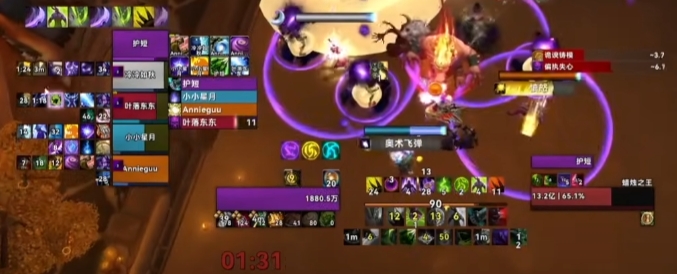
World of Warcraft (WoW) has long been defined by its vibrant addon community, enhancing everything from raid coordination to UI customization. However, Blizzard's recent announcement about scaling back specific addons, particularly those influencing combat, has sparked heated discussions among players. You've come to the right place if you're curious about what's changing and how it'll affect your gameplay. Please bookmark our site for more gaming insights, and don't forget to check out our WoW gold shop to elevate your experience!
Why Blizzard Is Targeting Combat Addons
Blizzard's game director, Ian Hazzikostas, recently shared in a PC Gamer interview that the company aims to reduce reliance on combat addons that predict or automate responses during encounters. The goal? To make WoW's challenges more about player skill and less about third-party tools. Addons like OmniCD, which track cooldowns in PvP and PvE, or those displaying interrupt timers, are Anchors that may be affected, as they give players an edge by providing real-time combat information. Blizzard believes this creates an unfair gap between addon users and those playing with the default UI, especially in high-stakes content like Mythic raids and dungeons.
The philosophy is straightforward: addons should enhance, not dominate, the gameplay experience. Hazzikostas emphasized that while addons for questing, gathering, role-playing, or auction house management are safe, those offering predictive combat data are on the chopping block. This shift is planned for later patches, possibly around the pre-patch for the Midnight expansion, giving players time to adapt.
Balancing the Playing Field
Blizzard's approach isn't about banning addons outright, but narrowing the gap between addon-heavy and default UI players. The company acknowledges that some encounters, like Brue Twister Ovenax or Jailer, are designed with such complexity that addons feel mandatory. For example, weakauras that assign players to specific markers or track cooldowns can make fights significantly easier—sometimes cutting hundreds of pulls, as seen in Method's Archimonde kill versus Paragon's.
To counter this, Blizzard is enhancing the in-game UI. Expect improvements to the cooldown manager, visual effects, audio cues, and nameplate handling. The current cooldown manager, introduced in patch 11.15, faced criticism for its lack of customization, but Blizzard is listening. They're working on making it a viable alternative to addons like WeakAuras or HUD suites, with plans to allow players to share rotation assist loadouts, similar to talent tree strings. This could let players import optimized rotations from class Discords or SimCraft, keeping things competitive yet accessible.
The Challenge of Nameplates and Unit Frames
Nameplates and unit frames are another pain point. Default nameplates often fail to display critical information like buffs, debuffs, or loss-of-control effects clearly, pushing players toward addons like Plater. These addons can highlight casters, track threat, or change colors based on debuffs like Moonfire. Blizzard plans to limit conditional logic in nameplates (e.g., changing appearance based on mob actions), which worries players who rely on these for quick decision-making. Similarly, unit frames lack the flexibility healers need to track defensives like Barkskin or Dispersion, making addons like Cell a staple for many.
Blizzard's solution is to bolster default UI functionality. For instance, they aim to telegraph lethal casts in dungeons better, reducing the need for alert addons. Tank swaps, diminishing returns in PvP/PvE, and stack indicators (e.g., for negative effects) will also see visual upgrades. The goal is to make the base game intuitive enough that addons are optional, not essential.
Impact on Gameplay and Encounter Design
Blizzard's changes aim to preserve WoW's challenge while shifting the burden from addons to player skill. Modern raids often require every player to handle complex mechanics, unlike older designs where specific roles had distinct tasks. Fights like Sprocket Monger or Six Bunk Junker highlight how addons can trivialize otherwise chaotic encounters with their heavy use of random “swirly” mechanics. Blizzard wants to reduce such mechanics, favoring designs that reward coordination and awareness over computational assistance.
For example, mechanics requiring players to clump up or move to specific spots may get extra response time or fewer variables. Trash pulls in Mythic Plus, notorious for demanding elaborate CC chains (e.g., triple kicks followed by Sigil of Chains and Solar Beam), could see reduced complexity. Blizzard also recognizes that players' increased sophistication—fueled by class Discords, Fatboss guides, and Dratnos documentaries—has raised expectations. Encounters are designed with this in mind, but the addon “arms race” has pushed complexity to extremes.
What This Means to Players?
For new players, these changes are a godsend. No longer will you feel forced to download a dozen addons to keep up. Veterans, however, may need to adjust. If the default UI delivers 96% of what addons offer, as Hazzikostas suggests, the transition could be smooth—provided Blizzard nails the implementation. Poorly executed changes could make dungeons and raids feel chaotic, especially if interrupt trackers or heal predictions vanish without robust replacements. The community's feedback will be crucial, and Blizzard is starting this conversation early to avoid a “rip the band-aid off” scenario.
Classic WoW Stays Untouched
Good news for Classic WoW fans: these changes likely won't affect you. Blizzard respects the nostalgic integrity of Classic, where addons like damage meters might appear, but combat log and aura access will remain intact. After all, as the video humorously notes, “nobody's downloading WeakAuras for Classic” to dodge Garrosh's melee swings.
FAQs About Blizzard's Addon Changes
Which addons are Blizzard targeting?
Blizzard is focusing on combat addons that predict or automate responses, like those tracking cooldowns (e.g., OmniCD) or interrupts. Questing, gathering, role-playing, and auction house addons are safe.
When will these changes take effect?
The earliest changes are expected around the pre-patch for the Midnight expansion or later patches in The War Within (e.g., 11.17 or 11.2).
Will default UI improvements replace addons entirely?
No, Blizzard aims to make addons optional by enhancing the cooldown manager, nameplates, unit frames, and visual/audio cues to close the gap.
How will this affect Mythic Plus and raids?
Encounters may have fewer complex mechanics (e.g., random swirlies) and better-telegraphed casts, reducing reliance on addons for coordination.
Can I still customize nameplates and unit frames?
Visual customization (size, appearance) will stay, but conditional logic (e.g., color changes based on buffs/debuffs) may be limited.
Thanks for Reading
Blizzard's addon overhaul is a bold step toward making WoW more accessible while preserving its challenge. Whether you're a newbie or a seasoned raider, these changes could redefine how you play. Keep an eye on MMOJUGG for the latest updates as Blizzard refines this vision!
Table of Content
 World of Warcraft Midnight Gold US
 World of Warcraft Midnight Items